


 English
 Español
Polyester Pongee Fabric: A Comprehensive Analysis of a Multifunctional Fabric
Introduction: The Core Charm of Polyester Pongee Fabric
This article provides a brief introduction to what polyeste...
Polyester taffeta lining fabric is widely used in apparel, accessories, and technical textiles due to its durability, lightweight nature, and smooth surface. Among the variations of this fabric, two primary types are commonly referenced: woven polyester taffeta lining fabric and knitted polyester taffeta lining fabric.
Polyester taffeta lining fabric is a synthetic textile made primarily from polyester fibers. The fabric is known for its smooth texture, lightweight properties, and resistance to wrinkles and abrasion, making it ideal for garment linings, bags, and technical uses. The construction method—woven or knitted—significantly influences its characteristics and performance.
Woven polyester taffeta lining fabric is made by interlacing warp and weft threads in a perpendicular manner, creating a stable and structured fabric. In contrast, knitted polyester taffeta lining fabric is produced by interlooping yarns, resulting in a fabric that is more flexible and stretchable.
| Property | Description |
|---|---|
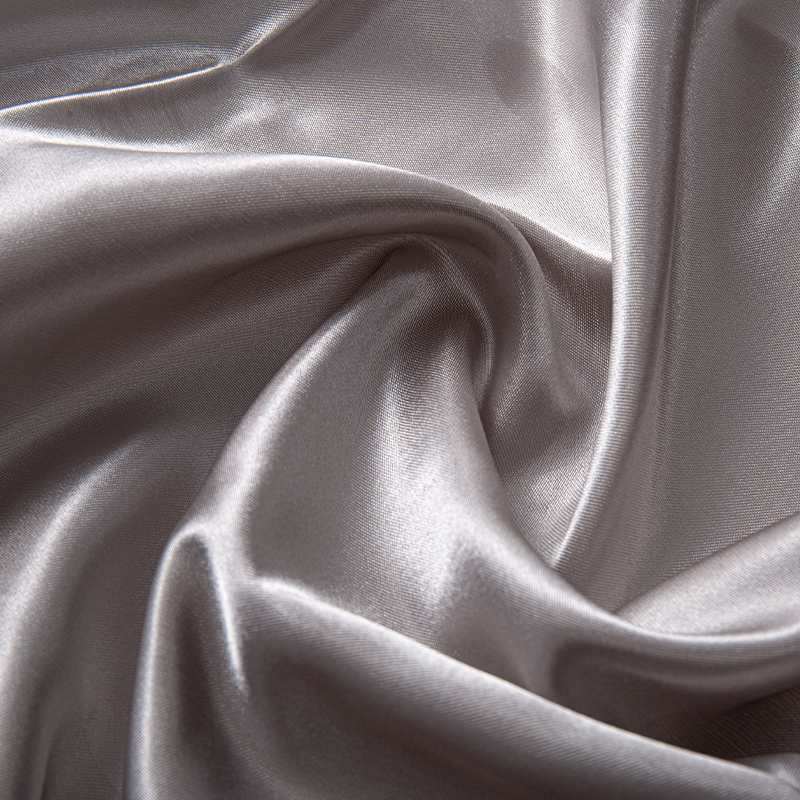
| Surface | Smooth, often slightly shiny, ideal for garment linings |
| Weight | Lightweight, ranging from 40 to 120 GSM depending on application |
| Durability | Resistant to tearing, abrasion, and deformation |
| Moisture Resistance | Naturally hydrophobic but can be treated for enhanced performance |
| Breathability | Moderate; depends on weave density or knit structure |
| Flexibility | Varies: woven is stable; knitted offers stretch and flexibility |
These properties form the foundation for understanding the differences between woven and knitted constructions, which directly affect garment performance and end-use applications.
The primary difference between woven and knitted polyester taffeta lining fabric lies in the construction of the yarns:
Woven polyester taffeta lining fabric is created by crisscrossing warp and weft yarns. This construction provides a dimensional stability, ensuring that the fabric maintains its shape and resists distortion under stress. The tightly interlaced yarns also give the fabric a slightly crisp hand feel, making it suitable for formal wear linings, jackets, and outerwear.
Knitted polyester taffeta lining fabric, on the other hand, is produced by looping yarns together. This technique results in stretchable and pliable material, which can conform better to body shapes or product contours. Knitted fabrics are typically softer and more elastic, making them suitable for activewear, sports garments, and flexible lining applications.
| Feature | Woven polyester taffeta lining fabric | Knitted polyester taffeta lining fabric |
|---|---|---|
| Construction | Interlaced warp and weft yarns | Interlooped yarns |
| Stretch | Minimal, mainly along bias | High, can stretch in multiple directions |
| Stability | High, maintains shape | Moderate, may deform under tension |
| Hand feel | Crisp and smooth | Soft and flexible |
| Applications | Jackets, coats, formal wear | Activewear, sports garments, flexible linings |
The structural differences between woven and knitted polyester taffeta lining fabric result in variations in functionality:
Durability and abrasion resistance: Woven fabrics typically offer higher abrasion resistance due to their tight interlacing, whereas knitted fabrics may be more prone to pilling or snagging if not properly finished.
Elasticity: Knitted polyester taffeta lining fabric offers superior stretch, providing better movement and comfort in garments that require flexibility. Woven fabrics, in contrast, are more rigid but provide a smooth base for structured designs.
Drape and garment appearance: Woven polyester taffeta lining fabric delivers a consistent drape that enhances formal garment shapes, while knitted versions offer a softer, more conforming drape ideal for casual or sportswear.
Moisture management and ventilation: Knitted polyester taffeta lining fabric often has a more open structure, allowing for better air circulation, whereas woven versions can act as more effective moisture barriers when a denser weave is used.
| Performance factor | Woven polyester taffeta lining fabric | Knitted polyester taffeta lining fabric |
|---|---|---|
| Tear resistance | High | Moderate |
| Stretch and recovery | Low | High |
| Breathability | Moderate | High |
| Suitability for structured garments | Excellent | Limited |
| Ease of maintenance | Resistant to wrinkling | Requires careful handling to prevent distortion |
The choice between woven and knitted polyester taffeta lining fabric largely depends on the end-use of the garment or product:
Woven polyester taffeta lining fabric is commonly used in:
Knitted polyester taffeta lining fabric finds applications in:
In addition to clothing, both types are used in technical textiles, including protective gear and lightweight industrial covers.
Proper maintenance is essential for preserving the appearance and functionality of polyester taffeta lining fabric, whether woven or knitted:
Additionally, the fabric’s moisture resistance and synthetic properties make it easy to clean, while special finishes may enhance stain resistance or water repellency.
When deciding between woven and knitted polyester taffeta lining fabric, several factors should be considered:
Understanding these considerations ensures that the fabric selected aligns with functional and aesthetic goals.
Polyester production involves synthetic fibers derived from petrochemicals, which raises environmental concerns. Choosing the right type of polyester taffeta lining fabric can affect sustainability outcomes:
Efforts to produce recycled polyester taffeta lining fabric and applying eco-friendly finishing treatments are increasingly common in the textile industry, helping to mitigate environmental impact.
Recent innovations focus on enhancing performance and versatility:
These advancements demonstrate the adaptability of polyester taffeta lining fabric for modern textile needs.
| Aspect | Woven polyester taffeta lining fabric | Knitted polyester taffeta lining fabric |
|---|---|---|
| Fabric structure | Interlaced warp and weft | Interlooped yarns |
| Stretch | Minimal | High |
| Stability | Excellent | Moderate |
| Hand feel | Crisp | Soft |
| Best suited for | Structured, formal garments | Flexible, casual garments |
| Maintenance | Easy, durable | Requires careful handling |
| Performance | High abrasion resistance | High elasticity and comfort |
Selecting the appropriate type requires evaluating the intended use, performance needs, aesthetic goals, and maintenance preferences.
Q1: Can woven polyester taffeta lining fabric be used in activewear?
A: While woven fabrics are durable, they lack the stretch needed for most activewear garments. Knitted versions are generally more suitable.
Q2: Is knitted polyester taffeta lining fabric suitable for formal jackets?
A: Knitted fabrics provide flexibility and comfort, but they may not maintain the structured appearance desired in formal jackets. Woven fabric is preferable.
Q3: How can I enhance the durability of knitted polyester taffeta lining fabric?
A: Using reinforced stitching, proper finishing, and careful washing can extend the lifespan of knitted fabrics.
Q4: Are there recycled options for polyester taffeta lining fabric?
A: Yes, fabrics incorporating recycled PET fibers are available and offer similar performance to conventional polyester.
Q5: What should I consider when choosing between woven and knitted polyester taffeta lining fabric?
A: Consider garment type, performance requirements, desired drape, and maintenance preferences to make an informed selection.



+86-137 0672 2970+86-137 5728 0930

Copyright © Changxing Dinghao Textile Co., Ltd.
All Rights Reserved.
Wholesale Microfiber Upholstery Fabric Factory
