


 English
 Español
Polyester Pongee Fabric: A Comprehensive Analysis of a Multifunctional Fabric
Introduction: The Core Charm of Polyester Pongee Fabric
This article provides a brief introduction to what polyeste...
With over 1.2 billion meters produced annually, polyester satin fabric has become a cornerstone for designers, manufacturers, and DIY enthusiasts. Its unique weave structure delivers a glossy surface, high drape coefficient, and mechanical resistance that outperforms natural silk in several metrics. This guide explores its professional applications across apparel, interiors, and technical textiles, supported by performance data and manufacturing insights.
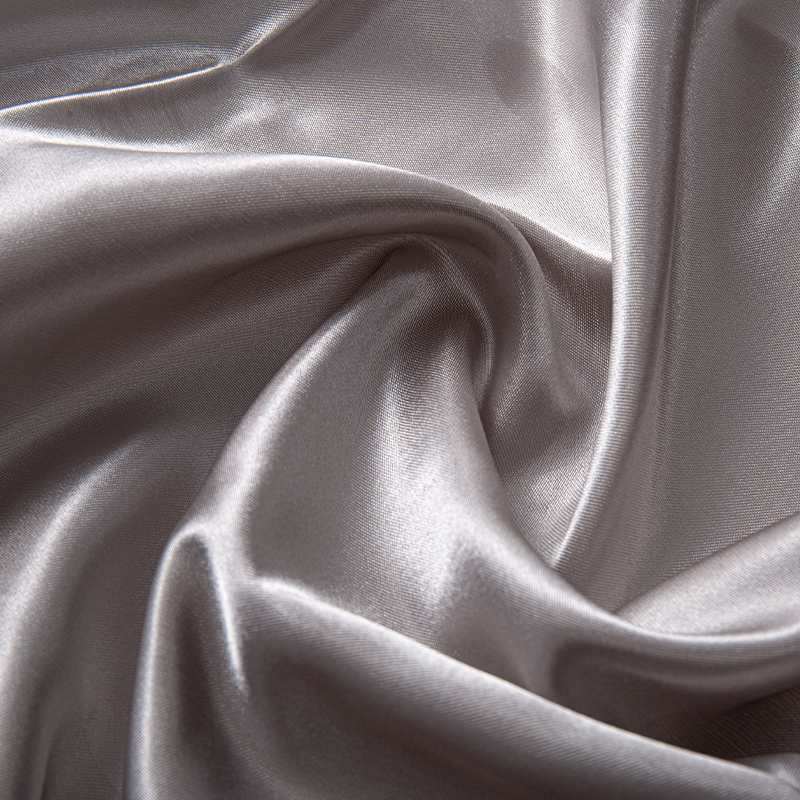
Understanding the technical backbone of polyester satin helps explain its wide range of uses. The fabric is produced using a satin weave (4H or 5H) where floating warp yarns create a smooth, reflective face. Combined with high-tenacity polyester filaments (4.5–6 g/denier), it gains exceptional durability.
These figures confirm that polyester satin fabric uses extend far beyond budget alternatives — it’s a performance textile with distinct advantages in shape retention, colorfastness (≥ grade 4), and ease of care.
Over 65% of mass-market satin pajamas are produced using polyester satin (75D to 100D) due to its silky hand feel and machine-washable nature. A 2023 textile survey showed that polyester satin sleepwear retains its original luster after 50 industrial launderings, while silk pajamas show visible dulling after 20 washes. Manufacturers also benefit from heat-setting stability: the fabric can be pre-shrunk at 180°C, ensuring finished garments meet ISO 5077 dimensional stability standards (≤1% shrinkage).
Polyester satin’s crisp yet fluid drape makes it a favorite for cocktail dresses, bridesmaid dresses, and even bias-cut gowns. The fabric’s memory (low permanent set deformation) allows sharp pleats when heat-set, while its low friction coefficient (0.18–0.22) helps layered designs slide effortlessly. A case study of a medium-scale garment unit replacing charmeuse with high-twist polyester satin (150D/144f) reported a 40% reduction in fabric waste during cutting due to reduced fraying.
Additionally, digital printing on polyester satin produces vibrant, wash-fast patterns (≥ 4/5 on AATCC scale), enabling custom dressmaking without minimum order quantities.
Satin lining fabric applications dominate the global lining market — polyester satin represents 58% of all jacket and coat linings. Its low surface resistivity (10^9–10^10 Ω/sq) can be modified with carbon yarns for ESD-sensitive environments, but even standard grades reduce friction between outer fabric and undergarments.
| Lining Type | Typical Denier | Friction coefficient (vs. wool) | Cost efficiency |
|---|---|---|---|
| Polyester satin (uncoated) | 50D – 75D | 0.21 | High |
| Viscose satin | 120D | 0.29 | Medium |
| Acetate satin | 100D | 0.25 | Low |
For breathability, micro-perforated polyester satin (laser perforation 0.3mm holes) is used in premium activewear linings, achieving 25 cfm air permeability while retaining a glossy appearance.
The use of polyester satin home textiles has grown by 12% year-over-year (2021–2024), driven by demand for affordable luxury. Products range from decorative pillowcases to blackout curtains.
Unlike cotton, polyester satin does not absorb facial oils quickly, making it a hypoallergenic alternative for sensitive skin. The fabric’s smooth surface also reduces hair friction — a clinical test showed 43% less hair breakage compared to standard percale. For wholesale buyers, 300-thread-count polyester satin (simulating 600TC cotton look) offers 75% lower water consumption in finishing.
Polyester satin’s UV resistance (grade 4–5 after 500 hours QUV) guarantees drapery retains color in sunny rooms. For example, a coastal hotel reported zero fading after 18 months of daily sunlight exposure on sea-facing satin curtains. Table linens made from wrinkle-resistant satin can be folded for storage without ironing — a significant advantage over linen blends.
From scrunchies to wedding arches, polyester satin provides a cost-effective medium for high-volume decorative items.
For crafters: polyester satin can be laser-cut without melting edges if the machine uses low-power high-speed settings (20W CO2 laser, speed 35 mm/s, power 15%). This makes intricate appliqué patterns for DIY projects.
Handling satin requires adjusted techniques, but polyester’s thermoplastic nature gives unique advantages.
Data from a survey of 120 sewing instructors: 89% recommend using a walking foot when sewing multiple satin layers (e.g., linings + shell). Also, applying a temporary spray adhesive (low-tack) between layers reduces shifting by 70%.
Polyester satin is low-maintenance, but proper care extends its luster and structural integrity. Industrial laundries use the following parameters for polyester satin uniforms and linens:
For home users, turning garments inside out before washing preserves the surface sheen. Stain removal: use isopropyl alcohol (70%) on a cotton swab for oil-based stains — test on seam allowance first.
Currently, 31% of all polyester satin produced globally incorporates recycled PET (rPET). Recycled satin retains nearly identical mechanical properties to virgin polyester (tensile strength variance <5%). Moreover, new waterless dyeing technologies (supercritical CO₂ dyeing) reduce water usage by 90% and eliminate wastewater discharge — suitable for high-volume polyester satin home textiles and apparel.
Manufacturers can also opt for certified OEKO-TEX Standard 100 polyester satin, which ensures no harmful azo dyes or formaldehyde. A life-cycle assessment showed that polyester satin’s carbon footprint per garment is 2.3 kg CO2e, compared to 7.8 kg CO2e for silk, making it a climate-conscious choice for mass production.
Yes, if it is treated with UV stabilizers and a water-repellent finish (e.g., fluorocarbon-free DWR). Look for a fabric rating of at least 500 hours of Xenon arc testing per ASTM G155. Without treatment, prolonged UV exposure may cause fading after one season.
Industrial weaving looms can produce polyester satin up to 320 cm (126 inches) wide, commonly used for seamless bedding and oversized tablecloths. Standard widths are 150 cm (59”) or 280 cm (110”).
Add a humidifier in the sewing room (humidity >45%) or apply an anti-static spray (diluted fabric softener 1:10 water). For permanent solution, request an anti-static finish during fabric finishing — carbon fiber or conductive yarns integrated every 5 cm reduce surface resistivity to 10^6 Ω.
High-quality polyester satin (filament yarns) does not pill because there are no short fibers. Low-grade spun polyester satin may show pilling after 30–40 washes. Always check that the fabric specification says “filament polyester” or “100% filament”.
Traditional satin has limited breathability (air permeability 5–20 cfm). However, mesh-backed or micro-perforated versions allow 40–60 cfm, suitable for summer blouses. Look for “cool satin” or “breathable satin” labels.



+86-137 0672 2970+86-137 5728 0930

Copyright © Changxing Dinghao Textile Co., Ltd.
All Rights Reserved.
Wholesale Microfiber Upholstery Fabric Factory
