


 English
 Español
Polyester Pongee Fabric: A Comprehensive Analysis of a Multifunctional Fabric
Introduction: The Core Charm of Polyester Pongee Fabric
This article provides a brief introduction to what polyeste...
When comparing synthetic fabrics, polyester dyed fabric stands out for its superior color retention, cost efficiency, and versatile performance — making it the dominant choice across apparel, home textiles, and industrial applications. Unlike nylon, acrylic, or spandex, polyester offers a unique combination of dyeability, dimensional stability, and durability that few other synthetics can match at scale.
Polyester dyed fabric is woven or knitted polyester that has undergone a dyeing process — typically disperse dyeing at high temperatures (around 130°C) — to achieve deep, uniform color throughout the fiber. Because polyester is hydrophobic, standard dyes cannot penetrate it without heat and pressure, which is why the dyeing process requires specialized equipment.
The result is a fabric where color is locked within the fiber structure rather than sitting on the surface, giving it exceptional wash fastness and resistance to fading compared to many other synthetics.
Nylon is often considered polyester's closest competitor. Both are strong, lightweight, and synthetic — but they diverge significantly in dyeing behavior and end-use performance.
| Property | Polyester Dyed Fabric | Nylon Fabric |
| Dye Type Used | Disperse dyes | Acid or disperse dyes |
| Color Fastness (Wash) | Grade 4–5 (ISO 105-C06) | Grade 3–4 |
| UV Resistance | High | Moderate |
| Moisture Absorption | ~0.4% | ~4.5% |
| Cost (relative) | Lower | Higher |
| Typical Applications | Bedsheets, apparel, upholstery | Activewear, hosiery, bags |
Polyester dyed fabric retains color better under prolonged sunlight and repeated washing — a critical factor for home textiles. Nylon, while softer and more elastic, absorbs more moisture, which can cause dye bleeding in humid conditions.
Acrylic is commonly used as a wool substitute, but it performs very differently from polyester when dyed:
For products like dyed blankets, upholstery, or bedding where longevity matters, polyester consistently outperforms acrylic in both color durability and structural integrity.
Viscose (rayon) is a semi-synthetic fabric derived from cellulose, often marketed for its soft, natural-like drape. It accepts dyes readily and produces rich tones — but it falls short of polyester in several critical areas:
Viscose loses up to 30–40% of its tensile strength when wet, making it prone to tearing and significant shrinkage after washing. Dyed polyester, by contrast, retains full strength when wet and shows minimal dimensional change, typically under 1% shrinkage.
While viscose takes color well initially, the reactive dyes used on it are susceptible to chlorine degradation and can bleed during washing if not properly fixed. Disperse-dyed polyester is chemically stable and resistant to chlorine, making it suitable for environments where regular disinfection is needed — such as hospital linens or hotel bedding.
Spandex is rarely used alone — it's typically blended with other fibers. When compared as a base fabric:
Blending polyester with a small percentage of spandex (typically 5–10%) is common in activewear, but for non-stretch applications like bedsheets or curtain fabric, 100% dyed polyester is the more practical and economical choice.
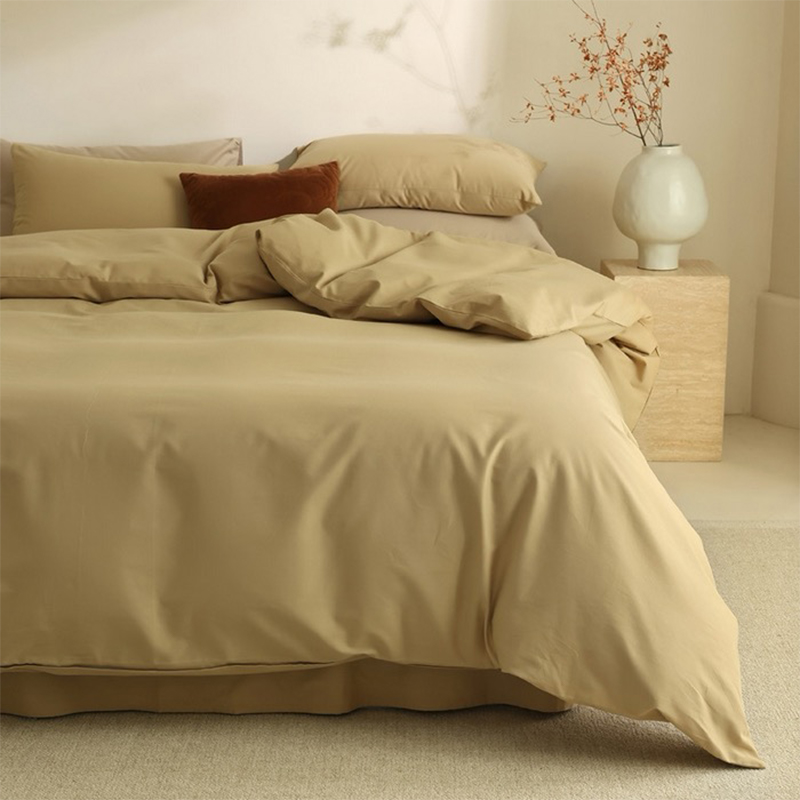
The home textile market — particularly bedsheets, pillowcases, duvet covers, and curtains — relies heavily on polyester dyed fabric for the following reasons:
No fabric is perfect. Compared to other synthetics, polyester dyed fabric does have a few trade-offs worth noting:
No. Polyester dyed fabric generally has superior UV and wash fastness compared to nylon, especially for light colors and outdoor applications.
It's difficult. Polyester requires high-temperature disperse dyeing — conditions not achievable with standard home dye kits, which are designed for natural fibers.
Generally yes, especially when dyed with OEKO-TEX certified processes. The dye is bonded within the fiber and not easily released under normal use conditions.
Disperse-dyed polyester produces highly vibrant, saturated colors with better fade resistance than reactive-dyed cotton, particularly after repeated washing.
Common thread counts range from 80 to 300 GSM in weight, with thread counts between 150 and 250 being standard for mid-range home textile applications.
It has a lower water footprint than cotton dyeing, but releases microplastics during washing. Recycled polyester (rPET) options are available to reduce overall environmental impact.



+86-137 0672 2970+86-137 5728 0930

Copyright © Changxing Dinghao Textile Co., Ltd.
All Rights Reserved.
Wholesale Microfiber Upholstery Fabric Factory
