


 English
 Español
Polyester Pongee Fabric: A Comprehensive Analysis of a Multifunctional Fabric
Introduction: The Core Charm of Polyester Pongee Fabric
This article provides a brief introduction to what polyeste...
The unique, soft handle of polyester peach skin fabric has made it a popular choice across numerous industries, from fashion to home furnishings. For wholesalers, buyers, and product developers, understanding the journey of this textile from raw polymer to finished roll is crucial for making informed sourcing decisions, accurately marketing the material, and ensuring it meets the specific needs of the end product. The distinctive character of polyester peach skin fabric is not inherent in the base fiber alone but is meticulously engineered through a series of specialized manufacturing and finishing processes.
The creation of polyester peach skin fabric begins with the production of the fundamental building block: the polyester filament. This stage sets the stage for the fabric’s inherent strength, durability, and chemical resistance.
The process starts with raw polyethylene terephthalate (PET) in the form of small chips or pellets. These chips are the same base polymer used for plastic bottles, which speaks to the recycled polyester potential of this fabric, an increasingly important consideration in today’s market. The chips are thoroughly dried to remove any trace moisture, as the presence of water during the subsequent melting phase can cause hydrolysis, degrading the polymer and weakening the final fibers.
The dried chips are fed into a large, heated vessel known as an extruder, where they are melted into a viscous, liquid polymer. This molten polymer is then forced through a spinneret, a metal plate meticulously drilled with dozens of microscopic holes. The shape and size of these holes determine the cross-section of the individual filaments. For many textiles, a standard round cross-section is used, but for fabrics aiming for a softer hand, modifications can be made at this stage. As the thin streams of molten polymer exit the spinneret, they are cooled by a flow of conditioned air, solidifying into continuous filaments. These filaments, at this stage, are too weak for textile use and must be drawn.
The solidified filaments are then stretched in a process called drawing. This molecular alignment significantly increases the tensile strength, toughness, and resilience of the filaments. Following drawing, the filaments may undergo texturing. This is a critical step for creating volume. Textured yarns are processed using methods like false-twist texturing, which crimps the filaments, giving them bulk, stretch, and a more natural, cotton-like feel rather than a slick, synthetic one. While the final peach skin effect is primarily achieved in finishing, the use of fine-denier, textured yarns provides an ideal substrate for the subsequent abrasion process. The resulting continuous filament yarn is then wound onto large spools, ready for the weaving stage. This foundational process ensures that the base yarn possesses the necessary strength and latent bulk that will contribute to the final fabric’s performance.
With the yarn prepared, the next phase involves constructing the textile structure itself. The weaving process determines the fabric’s basic integrity, weight, and drape.
The weaving process requires two sets of yarns: the warp (lengthwise) and the weft (widthwise). Preparing the warp is a meticulous operation. Hundreds of parallel yarns from the spools are wound onto a large beam, creating a sheet of yarns that will run the entire length of the fabric roll. Each yarn must be threaded through specific elements of the loom: first through the heddles, which are wire loops on frames that control the raising and lowering of the warp yarns, and then through the reed, a comb-like device that spaces the yarns evenly and beats the newly inserted weft yarn into place.
The loom interlaces the warp and weft yarns according to a predetermined pattern. For polyester peach skin fabric, the most common weave is the plain weave, where the weft yarn passes over one warp yarn and under the next in a consistent, repeating pattern. This simple and tight structure creates a stable, durable, and uniform fabric base that is ideal for the subsequent finishing processes. Other weaves, like twill or satin, may be used for specific effects, but the plain weave remains the industry standard for this application. The loom operates at high speeds, with the weft yarn being inserted across the warp shed—the space created between the raised and lowered warp yarns—by various mechanisms, such as air jets or rapiers. The reed then pushes, or “beats,” this new weft yarn firmly against the already formed fabric. This continuous, automated process results in a greige fabric (pronounced “grey”), which is the unfinished, loom-state cloth that will next undergo the transformative finishing treatments.
The greige fabric that emerges from the loom is a strong but unremarkable textile. It is in the finishing department where the iconic peach skin effect is born. This is the most crucial and specialized part of the production of polyester peach skin fabric.
Before the signature finishing can begin, the greige fabric must be prepared. It first passes through a heat-setting process, where it is exposed to high temperatures under tension. This thermally stabilizes the fabric, locking the yarns in place and ensuring that it will not shrink or distort significantly in later use or washing. Following heat setting, the fabric may be scoured. Scouring is a cleaning process that removes any natural impurities, sizing agents, or lubricants applied during the weaving process to protect the yarns. A clean fabric surface is essential for uniform and effective subsequent finishing.
This is the definitive step that gives polyester peach skin fabric its name and character. The process, known industrially as sanding or sueding, involves abrading the surface of the fabric with rollers covered in fine-grade sandpaper or emery. The number of rollers, their grit size, the speed of the fabric, and the tension are all precisely controlled to achieve a consistent effect.
Once the surface texture is established, the fabric is ready for coloration. Polyester, being a synthetic fiber, is most commonly dyed using disperse dyes. These dyes are specially formulated to sublime at high temperatures, allowing the dye molecules to penetrate the dense polymer structure of the polyester filaments.
After coloring, the fabric may receive additional functional finishes to enhance its performance for specific applications. These are applied via a padding mangle, where the fabric is immersed in a chemical bath and then passed through rollers to remove excess liquid.
The final step is drying, which is carefully controlled to ensure the fabric is stabilized at its correct width and length before being inspected and rolled for shipment.
The meticulous manufacturing and finishing processes endow polyester peach skin fabric with a specific set of properties that make it suitable for a wide range of applications. Understanding these characteristics allows buyers to match the fabric to the correct end-use.
The following table summarizes the key properties of the finished fabric:
| Property | Description | Implication for Buyers |
|---|---|---|
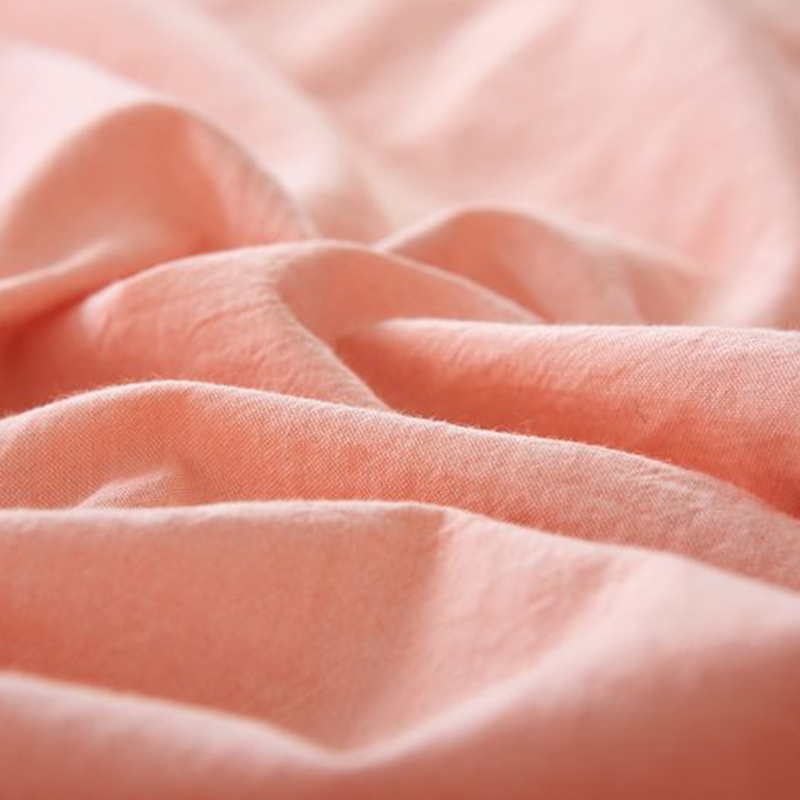
| Hand Feel | Exceptionally soft, smooth, and slightly fuzzy, resembling the skin of a peach. | A primary selling point for products where comfort against the skin is paramount. |
| Drape | Exhibits a fluid and soft drape, which is desirable for flowing garments like skirts and dresses. | Important for apparel designers considering the silhouette and movement of the garment. |
| Durability | High abrasion resistance and tensile strength due to the strong polyester base fibers. | Indicates good longevity for items that will see regular use, such as uniforms or upholstery. |
| Colorfastness | Excellent color retention when dyed with disperse dyes, resisting fading from washing and light exposure. | Ensures product appearance is maintained over time, a key quality indicator. |
| Wrinkle Resistance | Inherently resistant to wrinkling, making it easy-care and suitable for travel. | Reduces the need for ironing, enhancing the practicality for everyday apparel and home textiles. |
| Moisture Management | Low moisture absorbency; it wicks moisture away from the skin but does not breathe as well as natural fibers. | Ideal for moisture-wicking activewear but may be less comfortable in very hot, humid conditions. |
| Care and Maintenance | Easy to care for; typically machine washable and quick-drying. | A significant advantage for consumer products, simplifying aftercare. |
These properties collectively define the value proposition of polyester peach skin fabric. Its combination of a luxurious soft hand feel with practical durability and easy care creates a versatile material that appeals to both manufacturers and end-consumers. The low maintenance requirements are a particularly strong selling point in markets like casual apparel, children’s wear, and home décor.
The unique set of characteristics possessed by polyester peach skin fabric makes it a material of choice in diverse sectors. Its appeal lies in its ability to offer a high-quality, luxurious feel at a relatively accessible price point.
In the apparel industry, it is widely used for garments that benefit from a soft drape and comfortable feel. This includes women’s blouses, dresses, skirts, and lingerie, as well as loungewear and pajamas. Its use extends to sportswear, where its moisture-wicking properties are utilized in athletic tops and bottoms. The fabric’s opacity and durability also make it a candidate for lightweight jackets and uniforms. In the realm of home furnishings, polyester peach skin fabric is a popular choice for decorative purposes. It is used for draperies and curtains due to its fluid drape and matte appearance, which diffuses light softly. It is also employed in bedding, such as duvet covers and pillowcases, where the soft surface adds a touch of comfort, and in upholstery for accent chairs and cushions. Beyond these primary uses, the fabric finds its way into the production of accessories like scarves and bags, and is a common material for promotional items like banners and lightweight blankets, where its printability and appealing texture are major assets. This wide applicability underscores the fabric’s versatility and the success of its manufacturing process in creating a textile that meets a broad spectrum of market needs.
The journey of creating polyester peach skin fabric is a remarkable fusion of polymer science, precision engineering, and specialized textile finishing. It begins with the creation of strong, fine polyester filaments, which are then woven into a stable base cloth. However, its true identity is forged in the finishing department, where the controlled abrasion of sanding transforms a mundane greige good into a textile with an unmistakably soft and luxurious hand. Subsequent dyeing and functional finishing processes enhance its aesthetic and performance qualities, resulting in a fabric that is not only pleasant to the touch but also durable, colorfast, and easy to maintain.



+86-137 0672 2970+86-137 5728 0930

Copyright © Changxing Dinghao Textile Co., Ltd.
All Rights Reserved.
Wholesale Microfiber Upholstery Fabric Factory
